
Emergency Water Damage Drywall Repair in Tampa: 2026 Guide
If you are dealing with water damage drywall Tampa issues after a storm, you need a quick and professional solution. As we move into 2026, climate change brings unpredictable weather patterns and a higher risk of extreme events to Florida. Therefore, homeowners must be prepared. This comprehensive guide will help you understand the risks of hurricanes, detect early signs of moisture, and execute proper repairs to protect your home’s structural integrity.
Managing Water Damage Drywall Tampa Residents Face
Water damage in Tampa is a common occurrence because of our coastal location and subtropical climate. The high humidity that follows a storm creates a perfect environment for moisture to settle in your walls. Since drywall (also known as plasterboard or gypsum board) is highly porous, it absorbs this moisture like a sponge.
When these factors combine, they create severe vulnerabilities. For instance, when drywall gets soaked, it loses its structural strength. This can lead to sagging, bulging, and even a total collapse of the ceiling or wall. Furthermore, underestimating the magnitude of water damage can lead to severe structural defects and expensive mold remediation. Understanding the basics of drywall construction is your first step toward a safe home.
Predicted Hurricanes in 2026 and Your Home
Experts indicate that the year 2026 could see a significant surge in hurricane activity. This means Tampa homes are at a heightened risk of water intrusion. Hurricanes bring torrential rainfall, storm surges, and high winds that can easily damage your home’s exterior.
High-speed winds often damage roofs, windows, and doors, allowing rainwater to seep into the attic and walls. Additionally, a storm surge can flood the lower levels of a home, causing extensive damage to the base of your drywalls. In these scenarios, the drywall becomes structurally unstable and usually requires immediate replacement rather than a simple patch.
Moreover, the aftermath of a hurricane usually involves a rise in humidity levels, which exacerbates the problem. Even if your house didn’t flood, the air can be so wet that it softens the drywall over time. Therefore, it is essential to have a plan for water damage drywall Tampa emergencies before the season starts.
The Science of Drywall: Material and Vulnerabilities
Drywall consists of a gypsum core sandwiched between two layers of paper. While it is a great material for building interior walls, its paper backing is its “Achilles’ heel.” When exposed to high humidity, the paper provides a food source for mold and mildew.
A typical drywall sheet has a lifespan of around 30 years. However, this lifespan is drastically reduced if it is subjected to water damage. If the moisture problem isn’t addressed promptly, the situation can escalate quickly. Therefore, detecting water damage early is the key to preventing a full-scale renovation.
Detecting Water Damage in Drywalls: Signs and Symptoms
Detecting water damage is not always straightforward. Some obvious signs include discoloration and swelling. However, some symptoms are hidden, such as musty odors or the appearance of tiny dark spots.
-
Water Stains: These appear as yellowish or brownish patches. They often indicate a leak in the roof or a pipe behind the wall.
-
Bubbling and Swelling: This is a clear indication that the gypsum core has absorbed a significant amount of water.
-
Softness: If the wall feels soft or crumbly to the touch, it has lost its integrity.
-
Mold Growth: Dark spots or patches are a sign that fungi are eating the paper backing of your drywall. This is a health hazard and requires immediate attention.
Step-by-Step Guide: DIY Drywall Repair after Water Damage
If the water damage to your drywall is minor (less than 2 feet), you can attempt a DIY repair. Follow these steps:
-
Step 1: Safety First. Ensure you’re wearing safety goggles, gloves, and an N95 mask to protect yourself from dust and potential mold spores.
-
Step 2: Remove Damaged Sections. Using a utility knife, cut out the damaged portion. Always cut back to the nearest wall stud so you have something to screw the new piece into.
-
Step 3: Clean and Dry. Clean the area with a bleach solution (one part bleach to four parts water) to kill mold. Use a fan to ensure the interior of the wall is 100% dry before closing it up.
-
Step 4: Install New Material. Cut a new piece of drywall to fit and secure it with drywall screws.
-
Step 5: Tape and Mud. Apply joint compound, then drywall tape, and more compound. Let it dry for 24 hours.
-
Step 6: Sand and Paint. Sand it smooth and apply a primer before painting to match the rest of the room.
Professional Water Damage Drywall Tampa: When to Call Experts
While minor repairs can be a weekend project, significant damage requires a professional touch. Experts have the equipment (like industrial dehumidifiers and moisture meters) to ensure no water is left trapped inside your walls.
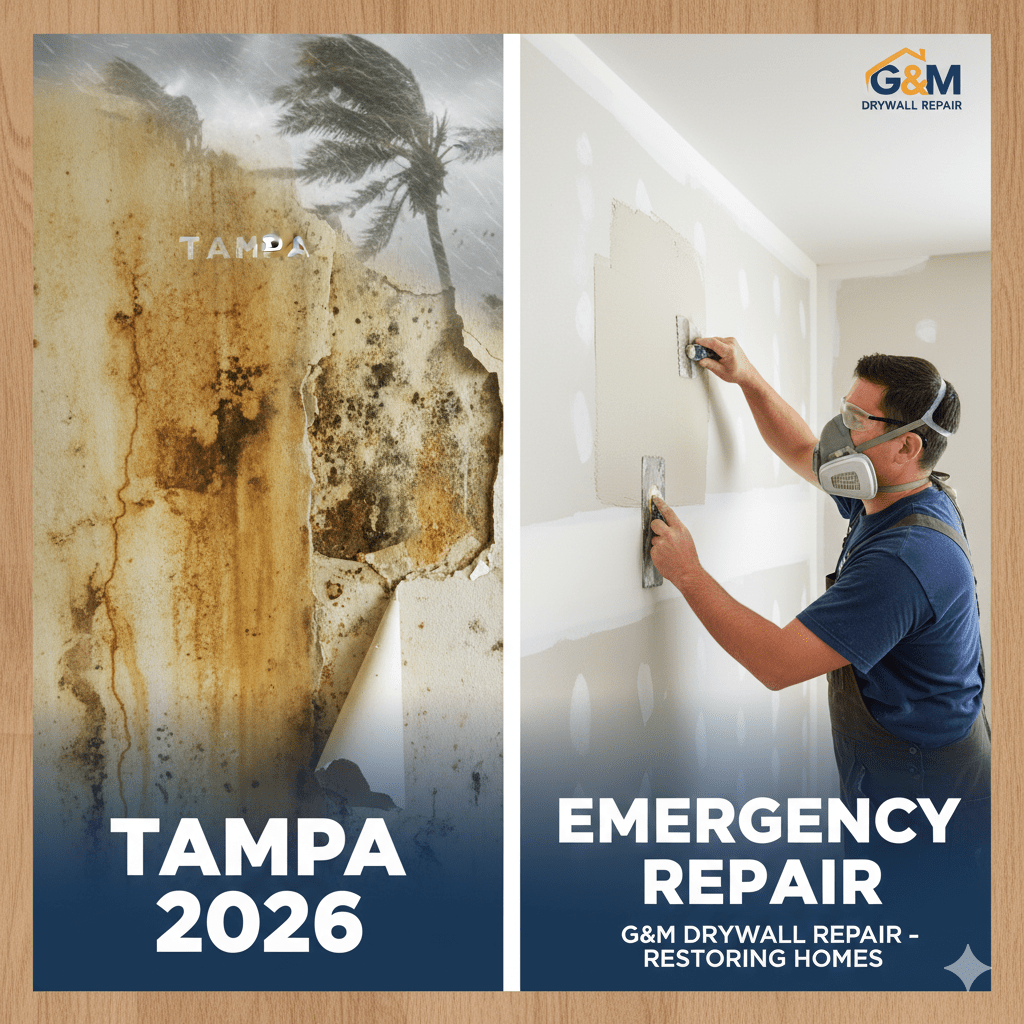
If the damage covers a large area, or if you see visible mold, it’s time to call in the specialists. In Tampa, G&M Drywall Repair specializes in hurricane recovery and moisture-related fixes. Hiring experts in water damage drywall Tampa is the safest way to guarantee that the repair is seamless and that your home remains mold-free. Remember, timely intervention can save you from costly structural repairs down the line.
0 Comments